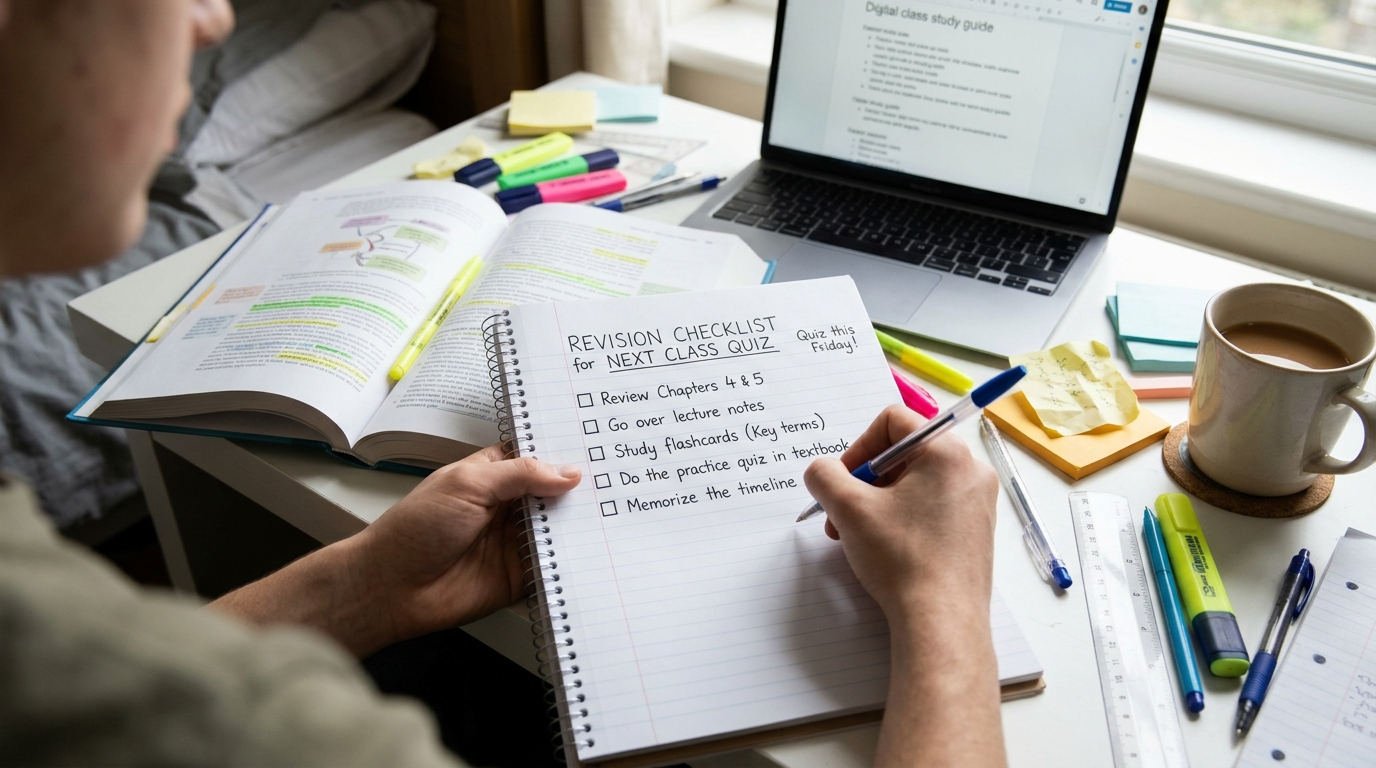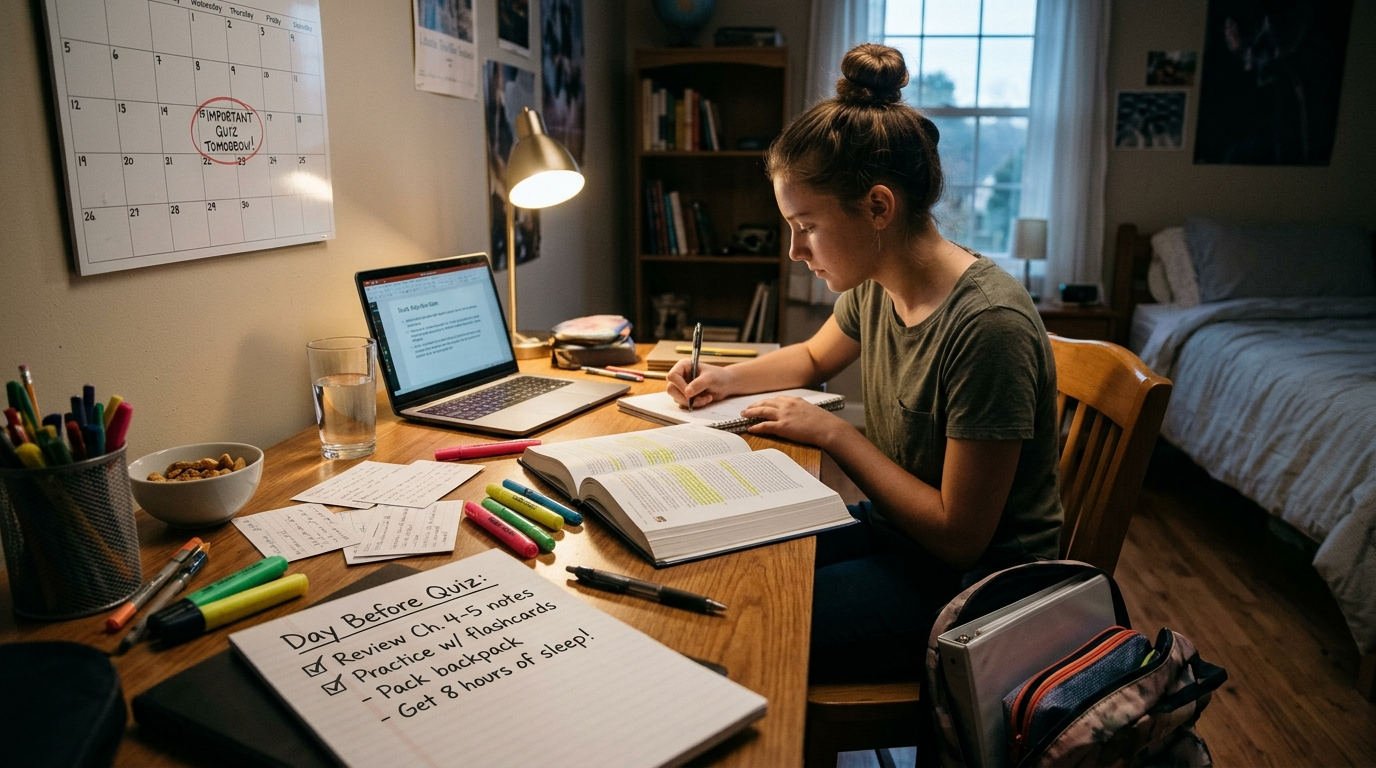
The day before an important school quiz is best used for consolidation, practical preparation, and rest. It is usually too late for an entirely new study system.
Confirm the assessment details
Check the scheduled time, topics, format, and permitted equipment. Resolve practical uncertainty while there is still a chance to ask questions.
Read the teacher's instructions one more time: location, start time, topics, question format, and permitted tools. If a calculator is not allowed, do not base your last practice session on using one. Clarify any unresolved detail while there is time to ask. The day before should reduce logistical uncertainty, not create new plans based on vague assumptions about what the test might include.
Review a short priority list
Focus on formulas, definitions, key relationships, and known weak spots. Avoid opening every notebook and treating all pages as equally urgent.
Use a short priority sheet rather than reopening every book. It might contain formulas that are easily reversed, definitions you often mix up, or one concept that repeatedly appeared in practice feedback. Prioritizing is not ignoring the syllabus; it is choosing what a limited final session can meaningfully strengthen. Avoid spending the evening rereading secure notes simply because that feels reassuring.
Test recall lightly
Use a few representative prompts without notes and correct the gaps you find. A short retrieval check can reveal what is available without overwhelming the evening.
Answer a handful of representative questions from memory, then check the responses. If you miss one, correct the underlying detail and try a fresh variation. The goal is to consolidate, not to measure your entire academic ability in one final practice test. Keep the set manageable so you can finish with a clearer sense of what to revisit and when to stop.
Revisit mistakes from recent practice
Look at a handful of recurring errors and say what would prevent them. Relearning every previous wrong answer may be unnecessary.
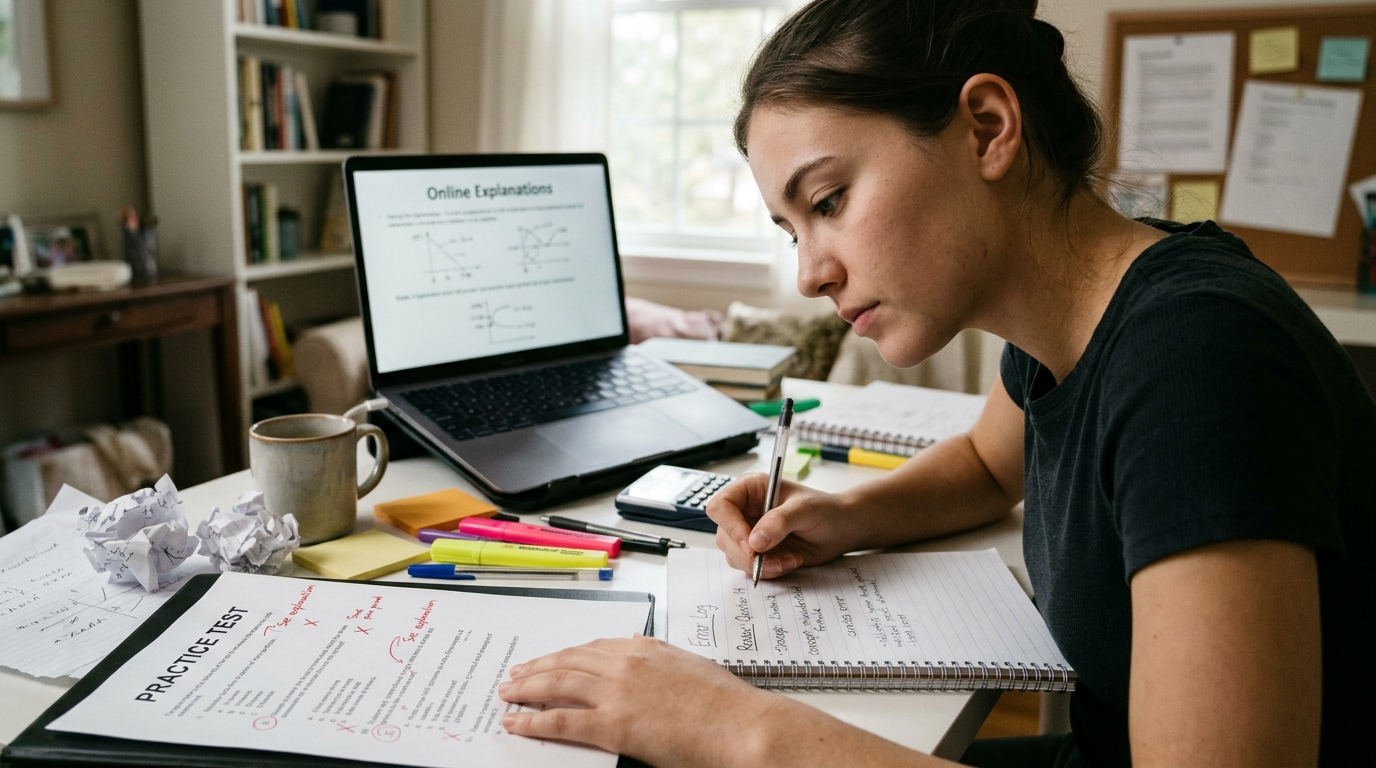
Look over recent error notes for recurring patterns. If you tend to miss units, make a plan to check units in the actual quiz. If you confuse two historical events, state their distinguishing facts once more. Do not rewrite every previous mistake or reopen a large answer key from the beginning. A few targeted corrections are more useful than a catalogue of old frustrations.
Prepare materials and travel plans
Pack required stationery or approved devices, charge equipment if needed, and check the route or classroom. Small details are easier to handle ahead of time.
Lay out permitted stationery, charge any allowed device, and confirm travel or classroom details. For an online quiz, check the platform instructions and reliable access ahead of time when possible. These small preparations remove decisions from the morning. Keep private login information secure rather than writing it on a public note, and follow the school’s rules about device use.
Keep the evening manageable
Long late-night sessions can leave you tired and distracted. Choose a reasonable stopping point and give yourself time to unwind.
Set a reasonable end to revision and leave time to relax. Staying up very late to learn an unfamiliar chapter may leave you tired for questions you already understand. Your exact sleep needs and commitments are individual, but rest deserves a place in the plan. A final evening is not a competition to see who can spend the most hours looking at notes.
Avoid unhelpful comparisons
Classmates may study different topics or for different lengths of time. Their last-minute activity does not show what you still need.
Classmates may announce that they are revising a different topic or have completed a much larger practice set. Their choices may reflect different weak spots, not a hidden assessment secret. Use your confirmed syllabus and your own error notes to decide whether anything important is missing. Last-minute comparisons can consume attention without providing reliable information about the quiz itself.
Make a simple morning plan
Decide when to arrive, what to bring, and how to settle before starting. The aim is a calm routine rather than another large revision session.
Choose a simple morning sequence: arrive with time to settle, check essential materials, read the quiz instructions, and begin with one clear question. If you have a small formula or vocabulary list, a brief look may be enough; avoid cramming a whole new topic while rushing to class. A calm start depends on realistic logistics and an actionable plan, not on guaranteed confidence.
Try it: prepare a final-day checklist
Prepare the evening before a school quiz by gathering permitted equipment and choosing two short topics to review.
Stop revision at a planned time, prepare your bag, and check what the teacher says about starting arrangements.
Leave unfamiliar high-effort material for a better learning window instead of sacrificing the whole night.