Many quiz mistakes are habits rather than mysteries. The most useful error review asks what went wrong in the decision process, not simply which answer was marked incorrect.
Reading too quickly changes the task
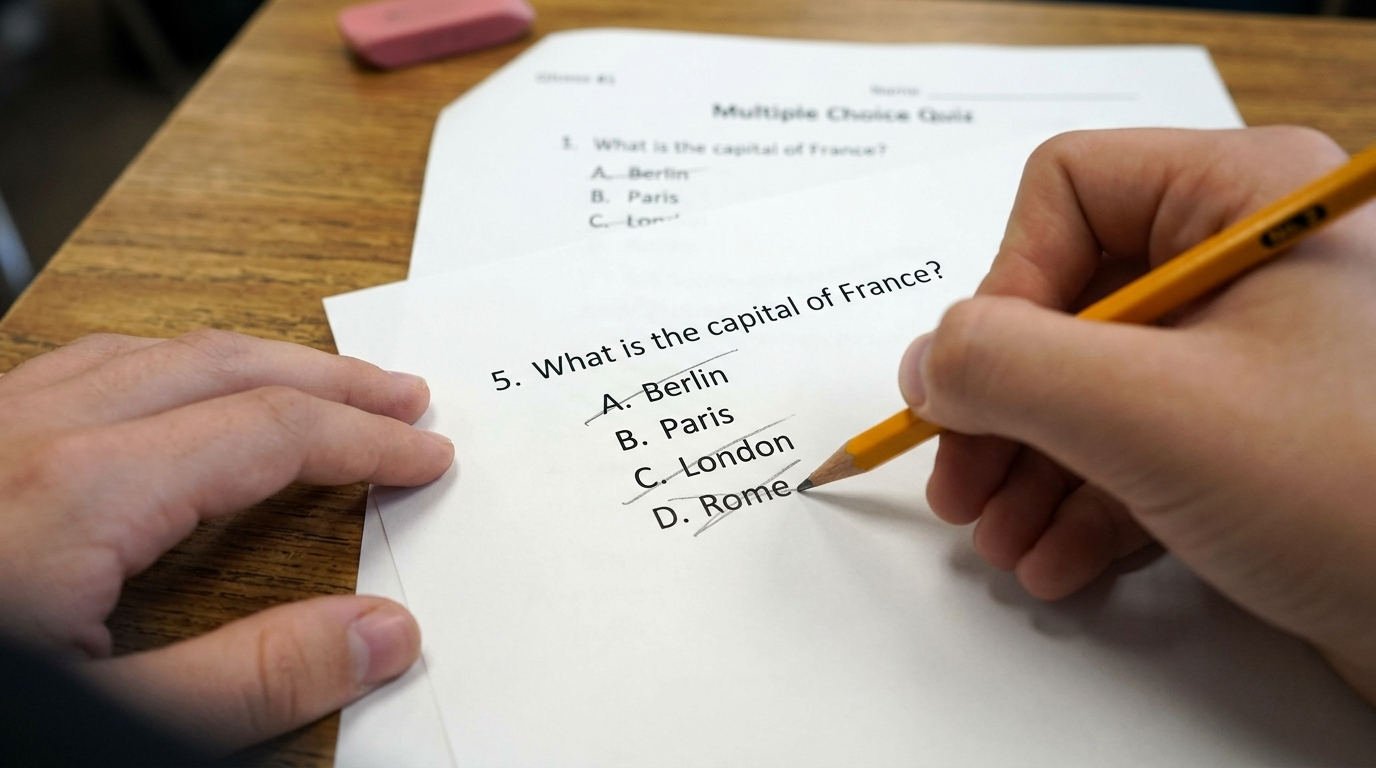
Students sometimes answer the topic they recognize while missing a qualifier or instruction. A two-read routine can catch “not,” “best,” and comparison terms before an option is selected.
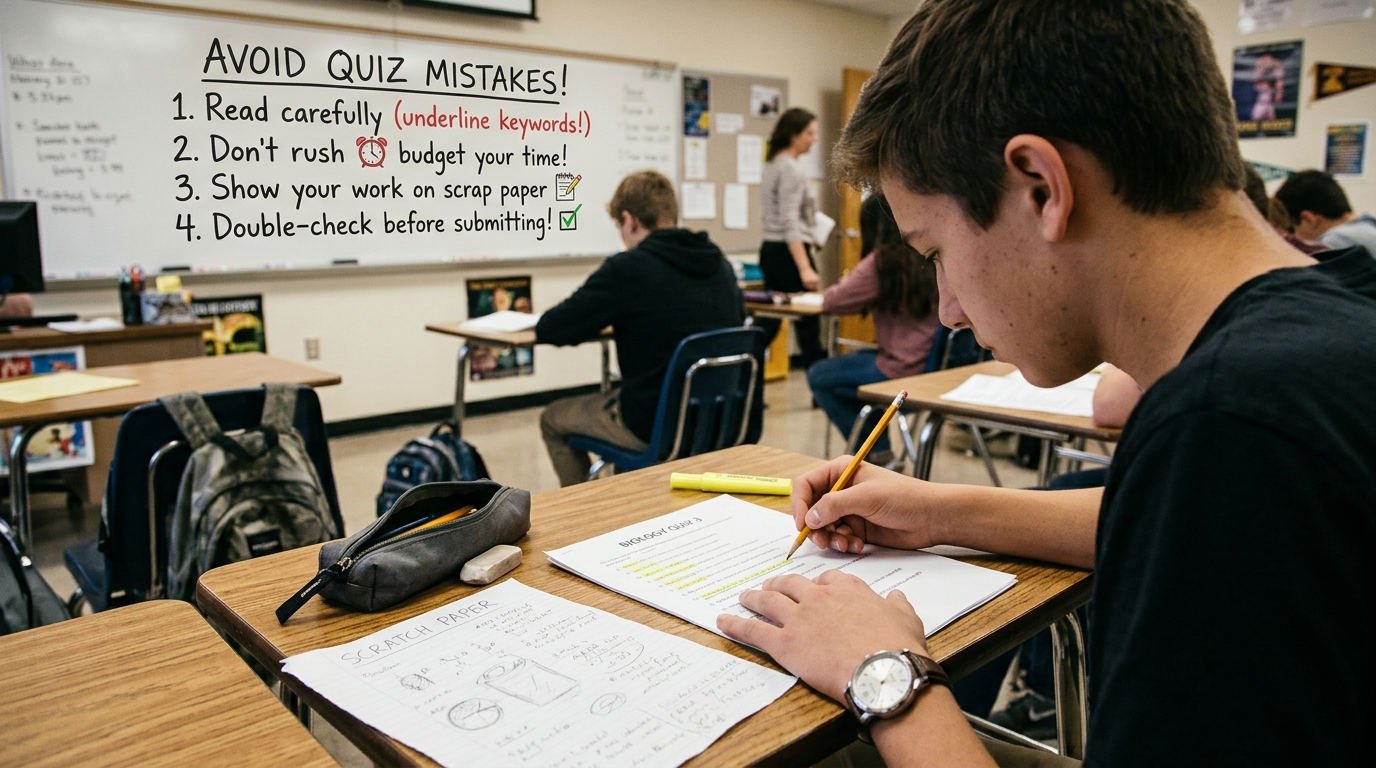
A student who skims “Which statement is NOT correct?” may answer accurately for the opposite question. The mistake can look like weak subject knowledge on a score report even when the learner understood all the facts. A useful correction is to underline instruction words before selecting an option, then confirm the instruction once more during the final check.
Recognizing is not the same as remembering
Seeing a familiar answer can feel like knowing it. Cover options, retrieve the idea independently, and then check whether the displayed choice matches your recalled evidence.
Reviewing a highlighted page can produce a strong sense of familiarity without showing whether an answer can be produced independently. Cover the page and explain the definition or process in your own words. If you struggle, you have discovered a learning gap, not a personal flaw. Recognition is useful for some tasks, but retrieval should also be practised when the quiz requires it.
Spending too long on one point costs others
Without a return plan, one hard question can prevent answers to easier items. Use a visible flag and continue when progress stalls.
One difficult question can consume the time needed for three familiar ones. After noticing a stall, mark the question clearly and move forward if the format permits. A later return may bring a new perspective or give you an opportunity to use remaining marks sensibly. The error to avoid is not difficulty; it is losing the rest of the assessment to one unresolved item.
Guessing without using available clues
A rushed random choice overlooks units, definitions, and contradictions in other alternatives. Even partial knowledge can help you reject options for defensible reasons.
A guessed answer about a chart may ignore axes, units, and the question's requested comparison. Even when you do not know the exact relationship, you might rule out a response with the wrong unit or impossible sign. Practise naming the evidence behind each rejected option. This helps separate thoughtful uncertainty from a choice made simply because one phrase looked familiar.
Transferring answers to the wrong line
On paper tests, a shifted bubble row can create a string of errors. Check question numbers when moving answers, especially after skipping a question.
If a paper test contains numbered answer bubbles, skipping a question requires deliberate alignment when you resume. It is easy to begin filling the next line and shift every later response. Pause after a skip to confirm the question number and response row. During review, inspect several known positions rather than relying on a glance down the whole sheet.
Over-editing correct answers
Changing a response because it suddenly feels unfamiliar can undo sound reasoning. Seek a concrete correction before revising your choice.
A hesitant student may change a correct answer because it suddenly feels too easy. A confident student may refuse to change an answer even after noticing a contradiction. Both habits replace evidence with mood. When reviewing, ask what specific observation, rule, or overlooked word supports the revised choice. Make changes when reasons improve, not merely when feelings change.
Treating every wrong answer as the same problem
Misreading, calculation errors, poor recall, and missing background knowledge need different remedies. Classify mistakes before deciding how to study.
A quiz review that labels every miss “careless” offers little direction. An incorrect decimal is not fixed by the same activity as a forgotten definition, and a negative-wording slip is different again. Record a concrete cause for each error. Group repeated causes, then choose practice that matches them: units checks, active recall, command-word exercises, or more foundational explanation.
Preventing a repeat with one focused adjustment
Choose one recurring error and test a specific fix in the next practice set. Keeping that feedback loop small makes improvement easier to observe.
After identifying a habit, test one correction on a fresh set. If you frequently miss qualifiers, underline them on the next ten questions and record whether the errors decrease. If your calculation mistakes persist, try a written unit check before each final answer. Compare results without overreacting to one score. Improvement comes from feedback linked to a change you can actually repeat.
Try it: diagnose a preventable mistake
Review the last five errors from a marked practice quiz and name their causes in plain language.
Separate missing knowledge from a misread qualifier, rushed calculation, or misplaced answer.
Choose one small prevention action for the most common cause and retest it in a new set.